

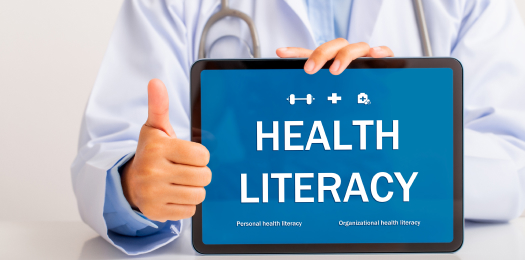
Health Literacy Month
We are the Beneficiary and Family Centered Care Quality Improvement Organization, working to improve the quality of care for Medicare beneficiaries. Our site offers beneficiary and family-centered care information for providers, patients, and families. Welcome!
Feeling More Confident At Your Doctor Appointments
Have you ever left a doctor’s appointment wishing you had asked one more question?
Or looked at test results and wondered what they really meant?
Healthcare can feel confusing at times. But understanding your care doesn’t have to be complicated. Sometimes it starts with something simple — writing down a question, asking for a clearer explanation, or reviewing trusted information after your visit.
Small steps can make a big difference.
Explore the tools below to help you feel more confident before, during, and after your medical appointments.
Finding Information on the Web
The internet is a wonderful resource to look up things.
However, it is important to find websites with trustworthy information:
- Websites ending with .gov are government sites. For example, www.medicare.gov.
- Websites that end in .org are usually healthcare institutions or organizations providing patient education.
- Websites ending with .edu are usually colleges and universities (e.g., medical schools).
Be More Involved With Your Health Care
Patients who ask questions and make sure they understand the answers tend to get more timely, accurate diagnoses and have better results and peace of mind.
- Here are some tips to use before, during, and after your medical appointment to make sure you get the best possible care: www.ahrq.gov
- You can also download this patient flyer and use it for notes before, during, and after your doctor appointment: Be More Engaged in Your Healthcare (PDF)
- For more information about how to be active in your own health care, including a video and brochure, click on this link (www.ahrq.gov/health-literacy) and scroll down to “For Patients.”
- MyHealthfinder is a prevention and wellness resource from the U.S. Department of Health and Human Services.
- Watch these short videos where patients talk about how simple questions can help you take better care of yourself, feel better, and get the right care at the right time. Doctors and nurses talk about how your questions help them take better care of you.
For Healthcare Providers and Stakeholders
Institute for Healthcare Advancement (IHA)
- IHA's Health Literacy Month website has shareable resources you can use to empower your organization or community.
U.S. Department of Health and Human Services
- Health Literacy Online is a guide that helps you develop health websites and digital health information materials that people can easily access and understand.
- MyHealthfinder is a prevention and wellness resource that you can share with people who have limited health literacy skills.
The Centers for Disease Control and Prevention
- The Understanding Health Literacy web page includes information such as Reports and Evidence on Limited Health Literacy. It also has a link to podcasts, so that you can listen to health literacy leaders describe their research and practice.
- Health literacy training for health professionals.
Information for:
What Does “Health Literacy” Mean?
It simply means understanding your health information well enough to make decisions that are right for you.